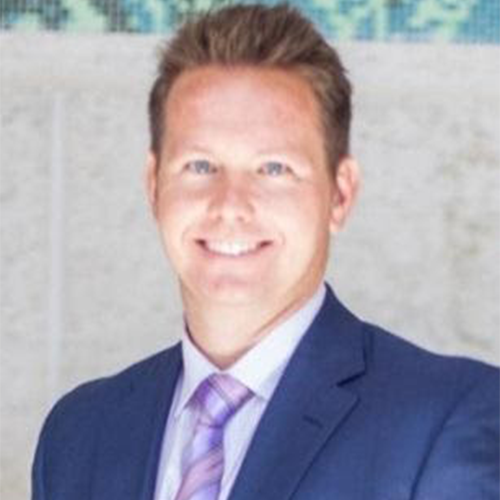
I’m excited to be introducing our guest. His name is Jeff Quintin. Jeff has successfully led his company to receive Inc. 5000 recognition. For those of you who haven’t heard of that, it’s a list of the top fastest-growing 5,000 companies in America. It takes quite a bit to be able to land on that list. You have to be growing at a pretty good clip to do that.
Jeff Quintin is one of the most successful real estate agents in the United States, consistently selling over 250 plus homes per year, which is the equivalent of over $150 million in sales. Not bad, Jeff. He’s reached that pinnacle in his career because he’s 100% dedicated to each and every customer having a positive experience. We are thrilled to have you as our guest, Jeff. Thank you for joining us.
Thank you, Brett. It’s an honor to be here.
I didn’t give the full bio. I saved some of it for you. I’d love to have you tell us more about you and your business. We dedicate this show to seven-figure businesses, their challenges and things that you’ve learned along the way. We don’t want to discard that very important journey from $0 to $1 million. Give us a little bit of that flavor. Tell us where you’re at, what you’re up to and anything more we need to know about Jeff.
I started in the real estate business as a normal typical real estate agent in 1992 at the age of nineteen. This is all I’ve ever known right out of high school about real estate. From about ‘92 to 2001 range, I was a solo agent doing what a normal real estate agent does. I started to build a team around me with an assistant and then started to get another assistant, another agent that worked with the buyer’s side of the business and another agent on the buyer’s side. We continued to grow. We went through the years 2001 to 2005, the peak years of the market, having some strong years.
I ran that way for a while. I had 3 administrative staff, myself and 2 other agents, 6 of us, as a small real estate team. We did well in those years. In the years 2006, 2007, 2008, 2009 and 2010, I started to grow a little bit more. From 2010 to 2014, it started growing a little bit bigger. Fast forward, we still have a small team at our local market or hub market. If you think of a bicycle wheel, you have the hub in the middle and the spokes that go out. The spokes that go out are other expansion partners in other additional locations.
We’ve been attempting and failing forward going out to other locations, opening up there, figuring that out, closing down and opening again. It’s been a little bit of a challenge. Fast forward, we have about 7 or 8 agents at our hub or sales agents. We have about 22 to 23 in other additional locations outside of my Southern New Jersey location. One specifically is in the Outer Banks, North Carolina. On September 1st, 2019, we merged with an independent company and took them over that had about twenty agents there. We have a whole separate business running in that location. We are growing for sure. That’s where things sit at the moment.
I graduated in ‘91. We’re the same age. As the old saying goes, you’re like an overnight success over the past years. Good for you. If you can remember back to that point where you crossed that million-dollar mark and you’re still pushing forward for growth, what were some of the challenges that you remember? It doesn’t have to be right at $1 million but somewhere between $1 and $3 million, we often find that businesses start to get stuck a little bit. Maybe they plateau and start to experience some new challenges. What were some of the things that you experienced in that seven-figure growth journey?
When you look at what got me to between the $1 million to $2 million mark or double, if that’s where it is, it all comes down to leverage. It’s where I’m at through where that was before. Before, I was always a major portion of the business. I was always working in it. Now, ultimately, I’m able to work more on it than in it. I’ve been able to leverage what I used to do and free me up to be more visionary to work on it, be more creative, go out and find the talent to join the organization and so forth.
Before, it was a challenge because I had always not of limited belief but the challenge was that this business isn’t going to survive. I am the business and no one can do it as good as me. People want me. Ultimately, though, when I would go on a vacation with my family or wife, I spent half of the time on the phone. That wasn’t having a business. It was having a job. It’s okay to have a job and earn that kind of income but ultimately, that’s not what I wanted.
A lot of us entrepreneurs have that challenge where you start to set in place those systems and models to be able to duplicate yourself at the level as much as you can. I’m not saying take your eye off the business or not be involved but ultimately, with the revenue side, if you could leverage that in such ways, that’s where you can double and triple and accelerate the growth.
Every single person reading this has either gone through some version of that or is struggling with it. Most don’t make that transition. They get stuck in the business doing the stuff. You said, “I am the business. Nobody does it better than me.” These are prevalent thoughts. Let’s spend our time dissecting that a little bit more here. How were you able to pull yourself out of that mode? Part of it is mindset but then part of it is real work day-to-day. What did you do differently to move from working in the business all the time to being able to work on the business more and achieve the kind of leverage you’re talking about?
It’s a struggle every day. It’s 1 step forward, 3 steps back, 1 step forward, 2 steps back. It’s always that thing. Believe me, I haven’t figured it out and I still haven’t figured it out. I’m not sure if I ever will figure it out. A lot of us are still figuring it out. We look at these entrepreneurs and people who have these amazing businesses but you peel back the curtain and look under the hood. In most cases, it’s a mess. My business looks great and all but we are in the momentum to breakthrough to breakdown. That’s what our business looks like. We hope that every breakthrough is greater than the last one.
I have a good friend that says, “I’m from the outside looking in. It’s never as good as it looks. From the inside looking out, it’s never quite as bad as it looks.” It depends on which side you’re in that space and what you said is exactly spot on. It’s like, “It might look good. We got Inc. 5000. I’ve got this team. We’ve got multiple locations. It doesn’t mean with we’re without problems but we’re constantly working at it.” That’s a given. You’re still working at it.
Thank you for admitting that you’re not perfect but you have figured out some things. You first started on this path of getting out of the business more and I don’t mean absenteeism. It doesn’t mean you don’t care or show up. It just means you’re not in the cogs of it all the time. You can pull yourself out and work on the business more. How did you pull yourself out?
The first thing in most things is you got to make a decision. The decision of whom you want to become, who you are and your mindset are changing. I attended one of Tony Robbins’ Business Mastery courses about a few years ago and he worked on that a lot. I wrote down, “Six months from now, I’m going to have a business and not a job.” He was pounding in our heads about that. That was something that was influential to understanding it from a third party which I’ve always heard a million times but hammered me when I came back from that. That changed a little bit of that decision. That’s number one.
The second part I realized is that when you have a team around you and you are the business and you’re always the one doing it, you’re robbing the opportunity from the others around you. In other words, if the coach is the player, the players aren’t always going to succeed at the level they would be if the guy who’s coaching is also playing the game.
In other words, I had to understand that I have this intellectual capital in my head that all the time is robbing me from pouring in what I know under their head because I’m not spending enough time training, coaching and mentoring all that I’ve known for all these years. I had to make a decision that I was going to do that. If I can do that and pour more time into them, I can then leverage this part of the business.
Ultimately, I made a decision that in my real estate business, in the real estate world, you work with buyers who work with sellers. I was always primarily the listing agent working with sellers. That’s what I always focused on, the listing side of the business. What I did was I went out and made a hire for a young guy, Dave, who is with me. He started in mid-26. I groomed him into working side by side with me to more or less clone what I was doing.
That started with six months of him setting appointments for me as an ISA, Inside Sales Associate, where he was not going on the appointments. He was just the person setting them up. From there, the next six months were okay. He would then go on the appointments with me. Later on, he would end up becoming a partner in that role.
For the next six months, it was me doing 75% of the presentations and work. It went to 50/50. Ultimately, 75/25. Probably a year and a half after all this started, he’s taken over that division and is doing a lot of what I used to do. It took time for me to find that role to make sure it’s the right talent, the right person and then spend time training that person to do it. He does a lot of what I used to do.
I get a lot of repeat and referral business. We can generate our business by going out aggressively or actively seeking it. He goes on all of those appointments, freeing me up to spend the time working on the business and the other agents and being able to continue to share the vision I have and bring the ideas and be the rainmaker side of the business to create more opportunities that are more meaningful to the agents than what was for me.
If I did the math right, you spent a couple of years working with this person to bring them along, have them get a feel for the business and shadow you. At some point, you made a transition from him shadowing and assisting to you coaching him as he did it. He’s doing it on his own.
We’re partners in it so that’s that. We’re grooming another guy in the same role, his name is Ryan, to replace Dave out of this. He can then go and do something else inside the company. There’s growth opportunity there. It’s getting the leverage of replacing each other as we move this thing forward.
You got to replace yourself. That’s probably the hardest thing for a business owner to do. The key is you didn’t replace yourself all at once. This is maybe one of your duties. You probably didn’t hand off CFO duties to that person. That was one thing that you’ve compartmentalized or chunked up the work of responsibility that you had and said, “I need somebody to own this piece.” You started to give that away to somebody else. That person is going to train somebody else to do that so they can move on to other things. It’s a lot of organizing work. It’s a lot of delegation and developing somebody else. That might be the biggest reason that we don’t do it. It takes time, effort and intention.
Going back to the whole thing, I said, “What do I want this to look like?” I started with a vision. I took a whiteboard and started thinking, “What does the business look like one year out? How many homes are we going to sell? What’s it like 3 years or 5 years out?” We have a five-year vision that’s very clear on the growth of the company, the volume, the units, our mission statement, our values and who we are going to hire, fire and train. I said, “My goal is to build this thing.”
I know what it is so I got to go find the who. Who’s going to help me do it and then go locate those people and start to become more attractive? When I get these individuals that I want to get into business with, I’m able to provide them and show them a career path and growth path. “Here’s my vision. Let’s do this together. You’re not just going to be a real estate agent within our team. Here’s an opportunity. You can go from here to here. You can take my job over at some point.” That’s where we can go and that’s available. I started the vision in all of this to see what it was I wanted. It’s going to fill in the gaps of the people that can help me get there.
At nineteen, you started in real estate. You then did the, “I’m a real estate agent,” thing from ‘92 to 2001.
I was a solo agent for those 9 to 10 years.
What role did having a vision play in you going from a solo agent or solopreneur to, “I’m going to go build a team and do something bigger?”
Here’s the thing. I’m more than ever reborn, rejuvenated, reinvented or whatever you want to call it. We get into an industry or a business. When we do it for so long time, we wake up one day like, “This is getting old. It’s the same thing.” Success is mastering the repetitious boredom of the same thing in and out. In most businesses, it’s the same thing. It’s time on task over time and doing the same thing over and over again. How long can you go?
I’m still very jazzed up and passionate about the business but what I’m more passionate about is not so much working with buyers and sellers where I was as an individual agent. It’s more about developing the people inside my organization to help them be better at working with our database, clients and buyers and sellers. It’s shifted to me from that to the people around me.
I had to create a vision for what that looked like because if I didn’t have a big world that I could create, there was no way I could get somebody else’s big world to fit inside mine. My whole goal is I stay. It keeps me up at night. Where do I create the next opportunity for someone whose talent? How can they grow with me? That’s what I’m looking at. Whatever that may be. If somebody comes into an organization and they want to start some type of tech company or a program, I want to get involved in the property management side. “Let’s figure that out. I’ll help you do that. Let’s put the systems in place.”

How To Lead: If you don’t have a big world that you could create, there’s no way you can get somebody else’s big world to fit inside yours. Ask yourself, “Where do I create the next opportunity for someone with talent, and how can they grow with me?”
Opportunity for others is the vision. This is what gets me fired up or more excited than going on another listing appointment because I’ve done that 4,000 times. If one more time, I was to hear, “I want you to cut your commission,” I want to throw up. I don’t want to hear that anymore. “Mr. Seller, if you keep asking that, I’m going to charge you double.” You get to the point like, “I’ve done this so what’s next?”
That’s what allowed me to do what we’ve gone to. I’m still trying to figure it out. However, I would never have been able to take on a different company in a whole different state that’s operating in a similar market but a different market or expand with an agent in Michigan or Fort Lauderdale. I would never have done that because I’d be too focused on where’s my next listing or who’s the next buyer I’m working with.
Where did you grow up? What part of the country?
In Southern New Jersey, where I live.
Did they have Dunkin’ Donuts in Southern New Jersey?
They did.
When I was younger, they had this commercial. I don’t know if you’ll remember this but there was the donut maker and the alarm clock would go off at some time. “Time to make the donuts.” As soon as we get into that mode, we’re like, “Time to do another listing. Time to go talk to another seller.” It could be a grind. What I love about what you’re saying is you changed the game for yourself so it stayed exciting. The excitement for you wasn’t to go make the donuts again. It was to go lead others and set a vision big enough that you could enroll people into that vision that could go make donuts.
They want to make donuts. It’s still fresh for them or it’s exciting. We made something up, the Dunkin’ Donuts principle. For all you reading, some of you have been at this a long time. You’ve kept doing that same thing. You’ve built your business to $1 million plus but created a nice job for yourself. Maybe it’s time to reinvent yourself.
If you create a vision big enough for yourself, you can attract other people to get involved and change the way that you interact with that same business. Why throw away all the valuable experiences you have? Why not leverage it in a new way to build your business? What a growth journey from a solo agent to a small team to an expanding team. It sounds like you acquired another company along the way. What other people-related or business growth challenges have you come across that you think would be helpful for our audience as they try to grow their seven-figure business?
It’s always a challenge. For me, it’s been a people challenge, meaning getting the right people around you. I’ve had some good people and not-so-good people. I’m not a good manager. I can motivate. I can coach, train and mentor but I’m not a manager type of guy. I’m more the visionary of what it is. “Here’s where we’re going. Let me show you how we’re going to get there. Here’s what we have to put in place. Bring the people in that can integrate inside that. Go and figure it out.”
Some of the challenges I’ve always had is making sure I get the right people around me. I’ve made some bad hires over the years. I’ve probably kept people for too long. What I’m learning is how to become a better hire, asking better questions, taking them through their life story and making sure that they get me. How do I win with them? How do they win with me? We’re used to being like, “They sound and look good. Let’s give them a shot.” “You’re hired.” That’s the wrong way to do it. You wake up 6 months or 1 year later and you’re like, “This is a bad decision.” You’ve wasted a lot of time.
I’ve made some good decisions. I’ve got a CEO of the company. He’s allowed me to track the numbers, profitability, metrics, conversion and accountability side of all that allowing me to have the 30,000 views to look into the business and be able to make some better decisions on all of that. It’s that portion I didn’t have until a couple of years ago.
We have other good solid people around me as far as the expansion director that’s going to help us expand and direct that portion of our business. These are all part of the vision or the org chart. It’s going out and finding those. It’s been a challenge with finding the right talent and bringing them in, which is always a challenge for a lot of us.
I’m not surprised. You and I had never talked before this interview. You said three things that I see over and over again. You said a lot of great things, tons of nuggets. In review, I heard you say early on, “It starts by getting out of the business so you can work on it more.” Less working in, more working on. You talked about the role of having a bigger vision so you could make room for other people. Reinvent yourself and along the way, develop them. You talked about hiring the right people and avoiding the wrong ones but those three things are super common across businesses of every type.
It doesn’t have to be in real estate like you’re in real estate. I’ve worked with hundreds of business owners across service industries, software, product, manufacturing and all kinds. Once you get the team to that million plus, you start to have more people and things start to get a little more complex. We got to be intentional and figure out what are the systems for getting everybody pulling in the same direction.
Why would people want to work here? I better have a good culture. All of a sudden, you’re doing the business building. Your job is business building, not your product or service anymore. You talked about some of the classic elements of what you have to learn to be a great business builder. You’re doing it. Good work.
It’s very challenging. Some days, you wake up saying, “What am I doing here?” Being an entrepreneur, like a business owner, it’s ups and downs dealing with people. You’re right. It’s for us to get to the next level and our systems in place to leap. We have to be tighter with our SOP. Our standard procedures manual has to be redone over and over again.
Whom are we bringing into the organization? We’re leveraging that part. We’re stacking up and building our foundation so we can grow and frame the next house on top of the foundation. It seems like that’s an ongoing thing. You build a foundation. You go back and break it. You build it again. It’s what I’m learning, at least. I’m new at this game. I’m a veteran in the business but I’m new at this. The thing is in our world, I was a real estate agent. That’s what I was like.

How To Lead: Build your foundation so you can grow and frame the next house on top of that foundation.
You work for a brokerage and you’re an agent. That’s what you do. You can get an assistant. Back in the ‘90s, if you had an assistant, that was amazing. No one had an assistant. I hired one assistant and then he started growing a team. The team thing was funky in the late ‘90s and early 2000. All of a sudden, real estate businesses or teams are big.
I had to make a mental shift and go, “I’m not a real estate agent. I work in a brokerage but I’m a business owner and that’s what I’ve built, a company inside of another company.” It’s allowed me to leverage analysis and go to other locations.” I’m fortunate to have that ability. Understand that I’m a business owner. This is what I am. Years ago, I would never think that way.
You’ve come a long way in your journey, Jeff. My sincere congratulations to you.
I appreciate that.
Whether you’re a lawyer, a doctor, a dentist, an orthodontist, a real estate agent or whatever you do, if you want to keep growing, at some point, you have to stop being that professional or subject matter expert. You have to make the transition to becoming a business builder. You have to do that if you want to keep growing. If you’re fine having a job, no problem. You can make a nice living.
The thing is it’s an identity shift. You mentally have to do that. What’s interesting is the people that sometimes you’re around and even your clients will pull you back into it. Sometimes, you are fighting. I still fight it. A Client will say, “No, I want you to come out list my house. Only you.” I’m like, “That’s not my job.” Not that I won’t do it. I’m never going to say, “I’m not in it.” I work around that but it’s a challenge. Sometimes it’s around you. You’ll be pushed but pulled back in sometimes.
Sometimes you’re pulled back in by others. Sometimes you’re pulled back in by yourself. You’re like, “Business building is hard. I want to go back to doing a couple of listings. I feel good. I do that well.” We suck ourselves back into it sometimes. This has been great. I want to circle back to one more thing before we wrap up. It was fascinating. You said, “I feel like we’re building a foundation that we can build the thing on top of it. That’s the next thing.”
You talked about rebuilding it like getting to the next place, starting again, tearing down and rebuilding. That was a great description of what I was alluding to when I talked about those 1s and 3s of revenue. The stage changes are real and predictable. When I get to that next level, I’m starting at a foundation again and I got to build from there.
Everybody who’s not at the place that you’re at, Jeff, is saying, “Foundation? That guy has built the big thing already. He’s got all these people. He’s bought a company in multiple locations. That’s a bigger thing and you’re saying foundation? What are you talking about?” Every time you get to that next place, there are some mindset changes but there are some real systems, processes and people changes you have to make.
It’s like upgrading every time. You go to the next place and do it again. It’s never-ending. It’s been a fascinating conversation, Jeff. I’m sincerely thrilled to have had you as a guest. If people want to learn about you and your business, maybe they want to do business with you or buy real estate from you, how do people connect with you and your business? Where can they learn more?
Anywhere on social media. It’s @JeffQuintin. Hit me on Facebook Messenger if you’re on Facebook or you can always email me as well, Jeff@TheQuintinGroup.com. It’s probably the easiest.
I appreciate you giving us a little bit of a view into your growth journey, Jeff. It was an invaluable insight for those who are reading and who are just getting to that point where they have to do some of the things you’ve already done. Your sharing helps a lot of people. I appreciate you making time. If there’s anything that I can do or my team can do to help you, we would love to do that. Thank you again for being at our show.
It’s a pleasure. Having the ability for you to interview other entrepreneurs and business owners has been invaluable to me and to be able to listen in and be so education-based on that. Thank you for all that you do as well.
No problem. Thank you to everyone who’s reading our episodes. Please keep coming back. We’re going to keep bringing great guests like Jeff. A couple of times a month, we bring business owners who have been where you’re trying to go and have been through what you’re doing. We also try to bring in some experts. From time to time, I will do a solo cast. Keep tuning in. We’re going to keep bringing you great stuff to help you in your seven-figure growth journey. Thanks, everyone.
Thank you.
Important Links
- Jeff Quintin
- @JeffQuintin – Facebook
- Jeff@TheQuintinGroup.com