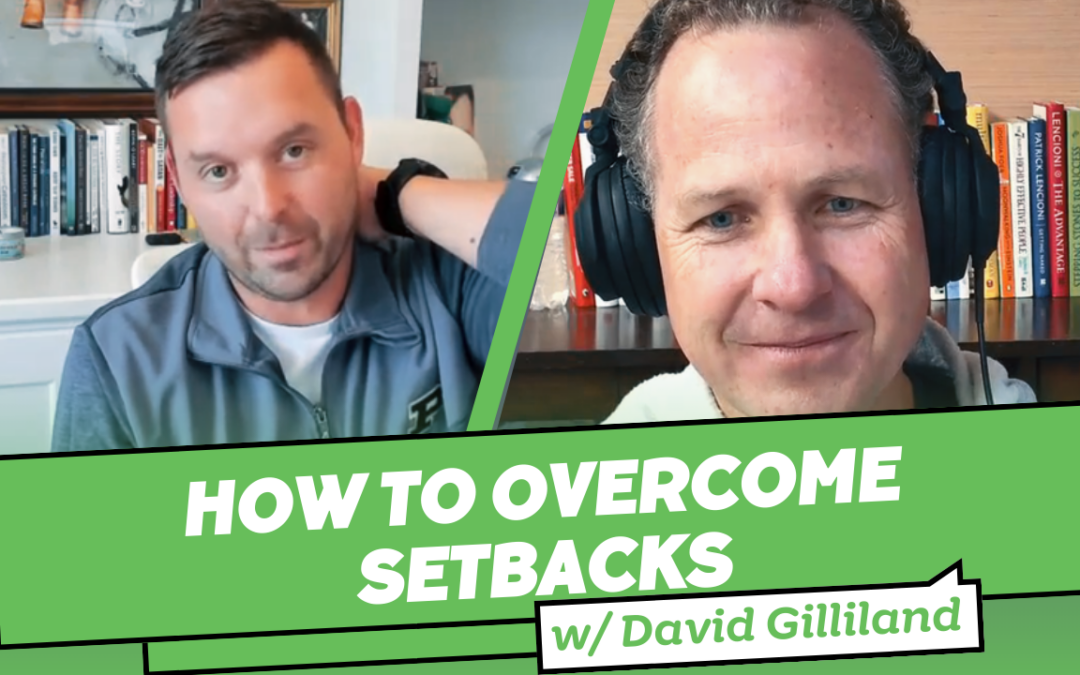

I’m excited to introduce to you Grant Botma. Welcome to our show. I want to say a little bit about you from the bio that I have, but then I’m going to ask you to fill in some blanks where I mess up. Grant has been working for decades on his company called Stewardship. He provides home loans, insurance, and investment advice. I love, “Qualifier with wisdom and love.” What a great combination for somebody who’s in the world of finance.
You have nationally ranked top producers who have won awards, like top 1%, Pinnacle Producer, Broker of the Year, and tons of great awards. You are here with us because of another recognition, which is the Inc. 5000, the fastest-growing company list in America, which is super awesome. Congrats on that. You are also an author.
You run a financial services company, but your Amazon bestselling book, The Problem Isn’t Their Paycheck is more about teaching business owners, leaders, and managers how to attract top talent and build a thriving company culture, which is amazing for somebody like me who geeks out on that stuff. What have I not shared from a bio standpoint? Tell us a little bit more about you and your business.
The biggest thing that was missed out on is the people who are responsible for those awards and accolades, and even responsible for creating bandwidth for me to even write a book as my team, the people on my team, the employees that I have and how awesome they are at what they do is the reason why we have won those awards and we have been able to do some of the things that we have done. I’m grateful and honored to have amazing people that have chosen to be a part of my team.
That speaks volumes to the type of leader that you are. Most people that I know who fit that glowing description that you gave are attracted to leaders whom they want to work with. For you to create the environment where that team would assemble speaks a lot. I know your type. You will deflect the praise to them, which I appreciate fully, but you are doing something right. We are grateful to have you on as a guest to share with our readers some of the secret sauce to building a team like that.
Before we get there, in order for you to build a business that achieved the fastest-growing status on the Inc. 5000 list in the US, you had to be able to figure out sales and marketing and product or service fulfillment to a point. You had to be able to get to that $1 million plus range. To be able to continue to grow quickly, you had to figure out some other things, which I will describe as things around building a team or maybe building a leadership team, the people, processes, and systems, the way you guys do planning and execution as one unit and all those types of things that you have to learn. Assuming that I’m even remotely close to accurate there. Did all of those things come naturally for you or did you run into some challenges along the way as you were growing?
The challenges are too many to count. I’m just a normal guy like most people. I grew up in a small town called Buckeye here in Arizona. I grew up on a farm. I’m the middle of seven kids who kicked cow patties for fun. There isn’t anything crazy intelligent about me. I didn’t have it figured out from day one. I would say that one of the biggest things that I learned is that the heart of every business is finding a need and filling it. That’s what happened. I found that there was this need that people had with finances, not just to get a mortgage, insurance, or investments, but to get it in a way that they could trust that it’s going to be in their best interest.
That’s where that wisdom and love comes in. I’m very intentional about how we originate mortgage loans, produce insurance policies, and manage people’s assets. We do it with savvy and wisdom. We know what we are doing, but we do it with empathy and genuine care for the customer. That’s the love portion. It sounds weird in finance, but that’s a need that’s there. We did our best to fill it. That’s how the business, the process, and the heart of how we got started.
That need was great and we grew. One of the biggest things that I had to overcome to get to that $1 million plus, as you talked about, is getting over myself. I believed that I was better than anybody at what I did, that no one could do the mortgages the way I did, or could do insurance, maybe like I would, or the investments I would. I had a hard time trusting employees or other people to do it the way that I wanted to do.
You are telling me that you are cow patty kicking past, figured out that you were the best at kicking cow patties, and nobody else could kick them as good as you.
I’m an arrogant jerk. I’m extremely prideful. I have a lot of confidence.
It sounds to me that you are normal from an entrepreneur standpoint. You figure things out. You learn things. You know how to do them. You worked hard, and then all of a sudden, you got to get out of your way. I love that you are saying that. How did you get out of your way?
There’s a common thread that all successful people have, and that’s a proclivity to take action. It takes confidence to take action. I didn’t necessarily lack there, but I did have to get out of my way. It happened once when somebody whom I cared about and cared about me grabbed me by the collar one day and said, “Why did you start your business?” I said, “I want to make an impact on people. I want to make the biggest impact as possible.” He told me, “That impact is going to be limited if it’s just you. You got to hire people and you have got to train them to be extensions of you, not exactly like you, because no one ever will be, but you need to train them to be extensions of you.”
What I learned at that moment is that trust is not something that’s earned, as many people say. Trust is something that is given. I had to give my trust to some people. I had to give my trust to them knowing that, “I will have grace. They will make mistakes. They will have problems,” but I’m going to give them my trust and let them act out in those mistakes, learn, and grow. The good news is those people that I have chosen to trust are now better at it than I ever was. I was wrong. I wasn’t the best

Unifying Purpose: Trust is not something that’s earned, as many people say. Trust is something that is given.
That takes a lot. Sometimes we talk about this concept as learning to relinquish control. Entrepreneurs hang onto the wheel sometimes because they are afraid. It’s like teaching your teenager how to drive and you are ready to grab that wheel at any sign of hesitancy, danger, or potential threat. It’s hard to let go sometimes. You found that trust isn’t earned, that you have to give it. Do you feel like you ever got burned at giving away trust?
Yes.
That’s real. Talk about that for a second. You don’t have to get into the details, but what was it like for you to feel, “That didn’t go well?”
I have a positive outlook and an ideal future that I want for every single person that I give that trust. The reality is they are human. They make mistakes like me. It does stink and hurt whenever they break that trust, either by not performing the way that you want. Here’s a reality. The trust that most people are scared of isn’t like a lack of performance. They are scared that people are going to steal from them or people are going to completely demolish the company brand or cause reputable harm to the company if they trust them. That still is a you problem. Trust is always going to be a you problem as a leader. Either you need to give the trust, or you need to find people who are worthy of giving trust too.
Understanding that there’s a real process that has to be put in place before you bring people on the team to give them that trust. That helps limit those times that hurt. The times that I got burnt, I never had anybody steal anything from me. I have never been burnt to a place where my company was demolished and by name.
I never had any of those dramatic things happen in the decades I have been doing this. It’s mostly been, “They are not performing right now the way that I would want them.” It requires me as a leader to have grace for them to look in the mirror to see what I could have done to help them perform better and move forward in that capacity.
It sounds to me like you have learned some leadership lessons along the way that enable you to find people who are trying hard to keep that trust. Since it’s not earned, maybe you give it to them, but if you give the gift of trust to somebody, doesn’t it almost elicit a response from that person? They are like, “I don’t want to lose this trust.”
We get it backward too often, especially as leaders. We think that people need to first behave, and if they behave, then we will start to trust them. If we trust them, that means that we are going to let them know that they belong, “You are one of my guys or gals.” I know it’s the opposite way. First, you have to let them know that they belong. You got to let them know that you care about them and they are a part of the team. You got to know that you have given them the trust.
You don’t just give them the trust internally and say nothing about it. You communicate that, and as you said, it’s a gift. You communicate how big of a gift it is. Now they carry responsibility. When you let them know that they belong, all of a sudden, they start to perform. The behaviors and the performance follow after you have given them that sense of belonging.
I could see why you can put wisdom and love in the description of your company, which is brilliant from a differentiation standpoint for a financial services firm where you don’t often see wisdom and love. Good for you. I can see if you were to gift that trust to one of my readers and somebody else, how that stems from a place of genuine care or can if you do it the right way.
If we do this in the wrong way, where we are gifting it, but with terms like, “Yes, but I’m expecting you to earn it still, but I’m fainting gifting it to you on the front end.” You can have the wrong motive as you gift this trust. If you do it from a place of genuine care, which I heard those words come out of your mouth, “I could see how people would want to live into that and step up in their performance.” That’s cool.
Let’s think about the situation we are in. I don’t know when this episode is going to post, but it will always be relevant. That is leading people in the midst of a crisis. We have got this Coronavirus situation happening. Businesses, the economy, and teamwork were turned upside down. We got to figure out what to do.
My biggest and most important response during all of this as a leader was to let my team know that I was there for them, that I genuinely cared about them, and I am with them. I understand that now they are probably going to have to figure out how to work from home if they haven’t been doing that in the past. Now that they have to figure out how to not only work but also manage to be now a homeschool parent because schools are getting closed.
There are some fear and uncertainty going on within them mentally, maybe even some frustration based on how our country has responded to this. There are issues that are happening. The biggest thing that I need to do is let them know that I care because their employment cannot be a barrier or another hindrance in their life. It needs to be a benefit. It needs to be something that gives them peace and confidence, something that they want to pursue.

Unifying Purpose: People’s employment cannot be a barrier or a hindrance in their lives. It needs to be a benefit. It needs to be something that gives them peace and confidence. It needs to be something they want to pursue.
As a result of some of the things that I did with my team to let them know that I cared over the last several months, my team broke records. We closed more mortgage loans than ever before. We closed more insurance policies than ever before. We brought in more assets under management than ever before. We are in the middle of an economic crisis because that’s how awesome the team is. They are able to act in confidence despite this crisis because they know that I care and support them. I’m giving them everything I got.
I was thinking about how much I struggle in my business to communicate the ROI of doing this leadership, this culture works that you are describing. You didn’t describe what or how to do it. You are describing the result of having a great team. It’s clear to me and any of our readers, you have spent a fair amount of time thinking about and growing yourself as a leader and creating a team very intentionally with a great culture.
You can tell as you talk about it. Is there any way for you to put a dollar amount on that type of investment? You have put a lot of time and energy into becoming that leader in setting up the team that way and establishing a culture where this is how we operate. It takes time and energy to do all that. Without putting a dollar number on it, you say at a time when there’s a bunch of economic turmoil and a bunch of businesses scrambling out there, you didn’t say that, but it’s true. A lot of businesses scrambling to get through this COVID crisis, but your team put up record numbers. That’s pretty cool.
I have an unbelievable amount of pride about that. I didn’t think that I could have more pride in my team and my business than I did, but I have somehow found even more pride in them and how they performed amidst this uncertainty. It was a beautiful thing to witness. It was a lot of fun to lead them by. I can’t give you a dollar amount that says, “This is how much money I have made more because of diving into behavioral science and social science and trying to make things as awesome as possible for my company culture.” I can give you statistics on how much it would cost me if I don’t jump into those things. All of us know the costs are anywhere from $6,000 to $60,000 depending on the position you are filling, but how much it costs to rehire somebody every time? That is expensive.
Having a great company culture helps with retention, but it also increases performance. Not only that your team is breaking records, but here’s the real thing. There’s no dollar amount to it. I enjoy what I do. I always thought I was going to retire at age 35. Now I’m sitting here at 37. “I will retire at 40.” I’d never want to retire. I find so much joy in caring for my team because I don’t know of another way to make a bigger impact on somebody’s life than through employment.
We give them income, but we can give them much more than that. We can give them an amazing community to be a part of. We can help with the challenges that they have in their employment and develop them into better human beings, spouses, and parents. We can create a purpose that they can pursue with other people that require selflessness, sacrifice, and making their lives matter to make them feel like, “I get to make a positive impact on the world on my job.” That is a ton of fun. I never want to stop doing it.
I could not have said any of those things better myself, and I spent all my time doing this. You have created a way to find fulfillment for yourself. This is a mirror moment here. For everybody reading, pull out your mirror and take a good look. How many of you can honestly tell yourself that the people in your business or the relationship you have with your team members is creating so much joy and satisfaction with you that you can’t imagine not doing it anymore? Most of the business owners that I know that we work with are on the other end of that spectrum saying, “I’m having headaches. I’m having nightmares. It’s costly. The people’s problems are too much. Why would I want to add to this? Why would I want to grow my business when it’s hard as it is?”
What you are learning from Grant, who’s capably learned all these lessons for himself in his own business, is that there’s a completely opposite truth to that, which is when you get this right, “It’s joyful. It’s fun. I don’t want to leave it. I don’t want to make money and go right off into the sunset. I want to keep doing this because I’m having such a positive impact on people’s lives through this business that I have created.” It’s pretty cool.
Those people who have been able to look in the mirror and honestly say, “I don’t have that,” are not alone. Deloitte did a study that said 88% of employed people are not giving their best at work. Most of your readers are probably shaking their heads, “9 out of 10 employees I have are not giving their best every day. I know what that’s like,” and that’s a norm. To me, that’s plain wrong.
Not only do employers deserve better than that because we provide so much for people, the economy, societies, and communities, but employees deserve better too. Employees deserve to go to a place where they can genuinely make an impact, become a master of a craft, and give everything they have got because there’s a lot more fulfillment when you are doing it that way.
I already know the way you feel about this, but I’m going to add a leading question anyway. Do you think that those 9 out of 10 people are waking up every day saying, “I want to go in, do average work, get by, and collect a paycheck?”
Definitely, not. The study was pretty extensive. Deloitte is a great company as far as this stuff goes. What they found is that the people were the 12%, the 1 out of 10, those people that were giving their best, they were able to give their best because they believed the work that they were doing mattered. They found purpose in their employment and were able to tie that purpose to the purpose of their life. Think about that. Anybody who is able to have that in their place of employment is going to give their best every day. Otherwise, they’d be an extremely depressed individual. They’d have to be lying to themselves. That’s a big deal.

Unifying Purpose: One out of ten people who were giving their best were able to do so because they believed the work they were doing mattered.
That 12% might be the kind who are able to generate that for themselves, or maybe they are fortunate to work with a leader who helps provide some of that purpose. For all of us reading this episode, we have a huge say in how many out of the nine can flip the switch from mostly disengaged to, “Now I have purpose.” A leader makes a difference there or can. I love that you have lived that. You have learned it. It sounds like you are passionately sharing that. You have written a book on it. The Problem Isn’t Their Paycheck. All of this great stuff that Grant is talking about passionately sounds like you can read all of it in that book, which I will be checking out.
What about more of your journey? I love that we get to talk to you after all the lessons have been learned. You talked first about getting over yourself. There was a lesson about relinquishing control. What other challenges came along the way as you tried to move in this direction that you are benefiting from now?
One of the stories that I tell in the book has to do with taking what was internal inside myself and perpetuating that to the team. I did start the business for a reason and a purpose. It wasn’t just to try to make money. That’s okay to want to produce an income, make money, build wealth, and be over $1 million as a lot of the readers are or trying to get to, that’s okay.
I can argue that money many times can be a measure of how well you are filling needs in our society. That’s all good and great, but that’s not the only reason why I started the business. I started the business because I genuinely saw a problem if we aren’t taking care of people’s finances and if they are not being taken care of correctly, then bad stuff happens.
People are lucky to know how to balance a checkbook by the time they graduate high school, let alone figure out how to buy insurance, get a loan for a home, or make sure that their investments don’t go to crap whenever the economy does. Those are things that are real needs and have to be filled. I wanted to create a place where people could get those things taken care of, whether they knew it or not because the number one cause of money or divorce is money fights.
A reason why parents don’t have a relationship with their kids like they want is maybe money. They are spending too much time working. If I can help solve some of those money problems for people, I’m genuinely creating a better life. That’s why our internal unified purpose here at Stewardship is to love people through finances.
When we do that, we are genuinely making an amazing impact on somebody’s life and we are making the world a better place. That’s a big deal for us. That was the purpose that I had inside. That was what I started the business on, but I didn’t communicate it to the team. I was managing my team the way the traditional management books told me from college and it wasn’t working out. It wasn’t sustainable. People wanted to leave. People were not consistently motivated.
What I found after diving into behavioral science and social science is that what Deloitte found is that people have got to have a purpose. If you can give them that purpose, then it changes everything. That’s what happened to me. I took the purpose that was inside of me and decided to perpetuate it to the rest of the culture and communicate the why behind what we are doing and how important it is.
Any best practices that you learned along the way taking that from inside of you? A lot of business owners, even if they haven’t articulated it as well as sounds like you may have at that point, they have something inside of them. It says, “Here’s why we do this thing.” How did you take that to the team? What did you do to enroll them?
I talk a lot about this in the book, but you have to create not just a mission statement. People heard, talked, or saw those. You might even have a mission statement and typically, in a mission statement, a bunch of people get together and go to a cabin for a couple of days and write this big grandiose statement with $30 words that they don’t necessarily understand and then they can’t repeat when they get back down the mountain or office. It might sound cool when you read it, but it’s not simple enough to absorb, follow, and repeat. You have to make this not just a mission statement but a unified purpose statement. A statement that is simple enough to repeat, simple enough to follow and it requires selflessness so that it unifies people around it.

Unifying Purpose: You have to make a unified purpose statement that is simple enough to repeat and follow.
Everybody on my team is coming into the office every day saying no to themself, sacrificing in some way, shape, or form to serve our community and love them through finances. What happens is when that’s communicated and everything that we do is pointed to that, then you start seeing everybody else selflessly give. That creates unity like nothing before. If one person decides to be selfish in a moment, they stick out like a sore thumb. Now, this unified purpose has created social pressure for everybody to perform, give and be selfless because if they don’t, they will be the only one on the team who isn’t.
It’s powerful when you get it dialed in. I couldn’t agree more. Purpose and values. I hear you on some of those ineffective mission statements. I’m not a fan of the mission statements that you described. I am a fan of something we call mission. We still use the mission word, but an objective like, “Here’s a unifying thing we are all up to.” What’s your version of, “Here’s what we are all up to guys together?” What do you call that?
I’d still call that our unified purpose. It’s one and the same. Our unified purpose here at Stewardship is to love people through finances. How we act on that are four key character traits. It sounds vague. It’s like, “How do you do that? That doesn’t make sense to me. It sounds neat. I hear your story cool, but now what?” It’s important to give some simple action items on how they can do it. Here at Stewardship, we do that through transparency. We are very transparent on every level. Many people in our personal finance world see some of the things that we tell and show our clients in our meetings. It’s like, “You show them what?”
We peel back to a curtain of The Wizard of Oz every day here. Transparency is a big way that we love people. We do it with humility. We are smart. We know what we are doing. We are savvy, but we also want to be humble, empathetic, and genuinely listen and care for people. We also do it with innovation. That’s where the wisdom and the intelligence come in becoming a master of a craft and communicating the perfect and wise moves that they need to be making to get the most out of their finances. What we are up to? We love people through finances. How do we do it? We do it with humility, transparency, and innovation.
I hate to assume, but I bet you have developed some set of questions for when you go to hire somebody that maps back to those character traits so that you know if they are going to fit well on the team.
My hiring process is pretty intense. The biggest reason for that is I have got to make sure that they are a culture fit. What’s a culture fit? A culture fit for me is, “Do they have the ability to love people well? Have they shown in their life that they have a habit of putting other people’s needs ahead of their own?” We are all selfish, myself included. I’m going to have selfish moments and days. We are going to go through poor seasons.
I want somebody on my team who genuinely knows how to put other people’s needs ahead of their own. The bottom line is full stop. I don’t care how “qualified” they are at doing a thing. I can teach almost anybody to do a thing. The most important thing is culture fit. Are they willing to come in every day put other people’s needs ahead of their own selflessly, give, love, and serve
If they are not fit with any of those character traits outside of selfless giving and loving, they are going to stick out. They are not going to work very well.
Too many business owners, managers, and leaders believe that the best talent requires the highest comp plan. What people do in Facebook groups or other areas, they try to look up, “I need to hire somebody for exposition. What is everybody else paying people an exposition?” “I got to make sure I’m at or around that price point or maybe higher, and I can get the best one for that.” Stats don’t tell us that. People with the most qualified degrees coming out of college are willing to take up to a 30% pay cut if they have a company that’s going to make the world a better place that has a unifying purpose. If they think the culture is great, they will take a big pay cut to go work for that place.
Although money is important, it’s not the most important thing. When you are hiring the people that have money as the most important thing stick out like crazy and they look like selfish people. You don’t want to hire those people, but also you don’t want to look for people with money first. When I hire, I don’t necessarily put together this posting that’s on a job posting website. I put together what I call a job announcement.
That job announcement is a one-page website that does not mention the pay on it one time. The webpage is pretty long. There’s lots of information on there, but all the information points to the unified purpose. It points to the purpose that they get to be a part of the team that they get to pursue that purpose with how we pursue that purpose, and how they are going to pursue it in that particular position.
It also talks about two other things that are more motivating and money. It talks about the freedom that I provide here as an employer, but it also talks about the affirmation, the master of a craft that I’m going to turn them into when they come to be a part of the team as well. Those three things, autonomy and freedom, mastery, affirmation, and unified purpose, are way more motivating than money. That’s a job announcement that describes all those things instead of money, it brings in resumes like crazy.
I imagine that sets you apart big time. As business owners, we love to talk about creating that perfect customer experience and we know how to market to attract great customers. What you described to me is a great example of creating very intentionally an employee experience or a team member experience where it’s like, “I know how to market to them. I know how to onboard them when they get here.” There’s a whole intentional thing that you have built around the employee experience that many of us have done for customers, but most of us have either not thought of or chosen not to invest that much time and energy in the employee aspect.
If I’m going to say I’m going to love people through finances, my employee is going to turn around and say, “How do I do that?” What I got to do is I got to love my employees. I got to care for them. I got to put their needs ahead of my own. I got to serve and support them. I got to let them know I’m with them. I got to give them the resources and things that they need. I genuinely have to do anything and everything I can to help them win their position. That way, whenever they ask themselves, “How do I love customers through finance?” “I do what Grant did to me. He cared for me. He put his needs ahead of my own.”
It is a lot easier to maintain your amazing culture when you are modeling it. The biggest downfall for any culture is to go around saying, “We do one thing.” It’s plastered on the walls, the one sheet,” or whatever alignment tools companies use. It’s one thing to say it. It’s another thing to do it. When those two things are out of alignment, then that’s when those cultures come crashing down. The way you are describing it is spot on. If you are being the thing that you are asking them to become, it’s pretty consistent. There’s a lot of integrity there.
In the book, I walked through how to create one of these unified purpose statements and how important it is, but one of those steps is looking in the mirror and saying, “Is it you?” If it’s not you, if that’s not already how you are currently living your life, if that’s not maybe how you want to continue to live your life, then don’t do it. It doesn’t matter how cool it sounds, but it’s got to be you as a leader.

The Problem Isn’t Their Paycheck: How to Attract Top Talent and Build a Thriving Company Culture
You got to be authentic to who you are. Otherwise, you are going to walk around as a hypocrite. People are going to say, “We say we do that, but we don’t.” That doesn’t work. I could geek out on this all day with you. I feel like we could have been best friends forever. Thank you for sharing your time as a busy business owner, but I know now that you have built a team that allows you to have moments to give interviews like this. Well done on the lessons learned over the years. It’s one thing to learn them. It’s another to apply them. I hope that our readers took a lot of great nuggets from what you said because you shared a bunch of them.
I’m on a lot of these shows and I didn’t know what to expect going into this interview, but now as we are sitting here toward the end of it, it was very relaxed. It felt like a fun conversation. I can’t say that about every show I have been on. You are doing a great job with this. You are great at interviewing somebody and creating a relaxed environment. It’s something I’d do again. Thank you.
Thank you for making this possible. All of our readers will benefit greatly. I hope that they will check out your book. I don’t know why I haven’t seen it before, but I am going to check it out. The Problem Isn’t Their Paycheck. There are lots of great wisdom and love from you and your team. I look forward to hearing about future growth awards from your team. I have a hunch you guys are going to be multi-year winners on that Inc. 5000. When you pop into the Inc. 500 range, I will get to say, “I interviewed that guy once.”
I appreciate it. Thank you much.
Thanks, everybody, for reading this episode. I hope that you will share it widely. One last thing. For anybody that wants to get in touch with you or find the book, last chance to share how they can contact you or learn more.
One of the places I’m most active is on Instagram. If you follow me @GrantBotma, I am posting almost every day and doing Instagram Stories at least every day where I communicate something about finances, leadership, company culture, or something like that. You can follow me there. I have a public profile. If you search my name on Amazon, Grant Botma, that book will come up. It’s in hardcover, softcover, Audible, eBook, and all the things.
Everybody, check that out and keep reading our blog. We love serving you and we look forward to bringing you other great guests like Grant in the future. Please share, review, and rate. We will see you next episode.
Important Links
- Stewardship
- The Problem Isn’t Their Paycheck
- @GrantBotma – Instagram