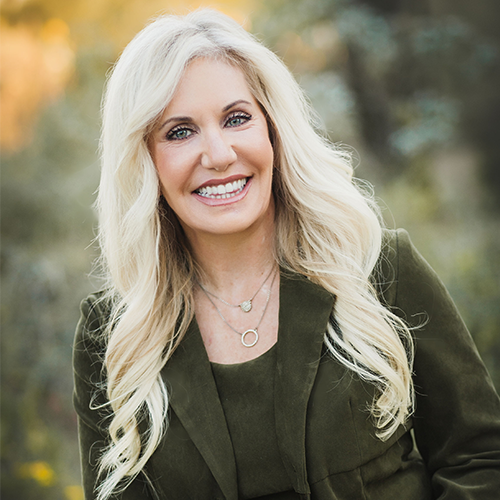

I’m super excited to have with us a special guest. Her name is Angela Olea. She is the Founder and CEO of an assisted living locator company. In fact, that’s the name of their company, Assisted Living Locators and I will let her tell you more about that. She built the company into a national presence and now has over 100 franchises in 34 states. Welcome, Angela, to our show. Thank you for joining us.
Thank you for having me. I appreciate the opportunity.
As we normally do, I would love to get a minute or two to have my audience become acquainted with you and the business that you have built. If you could tell us a little bit about yourself and the business, then we will get into trying to extract a ton of great experience and insights from the things that you have done.
My background is a registered nurse and entrepreneurship came naturally to me. My mother was a nurse and my father was a business owner who started moving companies. Since I was a child, I have always been innovative and doing different things. As a life choice, I decided to become a registered nurse and was working in the hospital system in Scottsdale taking care of acute care patients. I began to see a pattern that raised some alerts to me as we have mobile families that were separated from their elder parents.
Especially in a state like Arizona where we have snowbirds. What I was seeing in the hospital was frequent reignitions and we would discharge seniors. They were falling through the cracks without having appropriate support services. They would come back to the hospital, we would give them the right medications at the right time and discharge. They would repeat coming back each time more disheveled.
One of these times in one patient in particular, I sat down with case management to explore what are we going to do. This is a problem. We are seeing a big discrepancy in being able to navigate once we get someone out of the hospital. What are the support services in place? I began to learn about assisted living options and small homes, and large properties. At the time, there were over a thousand properties in Arizona.
My next question is, how do you select? It was a matter of brochures being passed and not vetted. Not a communication of how do you decide on this thousand? A light bulb went off. Although I was not unhappy whatsoever with nursing, this was a calling. It was a way that I could fulfill my purpose of service to seniors and being that care provider but in a different way that would carry that all the way through.
I began exploring what is assisted living and what opportunities are out there. Through a long determination, I decided that the best route would be to launch my own assisted living placement business and I did. Helping families and being able to service them was tremendous and the business began growing.
I started getting established a website and started getting calls from across the United States requesting services such as ours to help handhold the families and guide them. Again, a light bulb went off. When I looked to see what was out there, there were no franchises established. There was home care and there was skilled home health and nursing but there was not an assisted living placement franchise in the US that had not been done before.
I embarked on that in 2006 and launched the first franchise assisted living placement franchise in the US. That was an epic ride of exploration and learning. Fast forward, it is now an industry with its insurance criteria. There are many other franchises now that have joined the ranks that gave that credibility to the industry. I like to say I wrote the original cookbook and everybody is using some variation of that original cookbook but I truly paved the way for that and it serves different purposes. Growing early on, it was working with local individuals and local entrepreneurs that wanted to embark on this endeavor and follow the vision and the dream that I created.
I was waiting for the opportunity to say, “Wow.” We always get to talk to amazing entrepreneurs on this show, which is one of my favorite things. They are always doing cool stuff and creating but it’s not every day. It’s way less frequent that I get to talk to an industry pioneer. Congrats on being a true trendsetter. Creating something that wasn’t there and now there’s a whole industry around it.
Great timing and great vision on your part. It’s also exciting for me to get on one of these interviews and realize that the person I’m interviewing is down the street. We are both in Arizona. I only bring that up because I want my audience to read that one of the things that I noticed about Angela is that one of the very respected business publications here locally acknowledged her and recognized her as one of the Most Influential Women in Arizona for 2019.
Congratulations on that recognition as well. I know that’s not why you started your business but it is a great acknowledgment of the type of impact that you have had. Not only locally from a business standpoint but now nationally in terms of an industry that didn’t exist back in 2006 when you started your business. Cool stuff. Weren’t you also recognized as one of the Inc. 5000 Fastest-Growing companies in the US?
Yes. 2019 was an epic year for me and Assisted Living Locators.
What another outstanding accomplishment. We have had other others of those recognized on that list on this show. It’s always an honor to have somebody who’s been at the helm of a company that’s growing quickly because you are experiencing challenges that our readers need to know about. Not just experiencing those challenges but finding ways and learning how to overcome those challenges. Let’s dive into that a little bit.
You don’t have to remember the precise point in time when your business crossed over that million-dollar in sales mark but I would like you to roughly go back to that time and reflect on what some of the challenges were as the team started to grow and the business started to grow and you started to feel some traction around getting customers or in your case, creating this franchise model. Where I imagine early on, there was excitement every time you opened up in a new state with a new franchisee. What was it like for you to cross over that $1 million mark? What were some of the challenges that you began to experience as this business started to take off?
Some of the challenges for me were knowing that I needed to delegate. I needed to elevate and delegate and grow my team with quality people, that scalability. What it meant was that I was going to have to take a very different role in the organization. What helped me get to that point was being a visionary and creating strategic partnerships. I needed to separate myself to a certain degree from the day-to-day operations, and the day-to-day minutia of that and empower others and my team so that I could continue to look for those opportunities that we are going to continue to take our franchise to another level and get that branding out and do those things that we needed to do of being an infant in the industry.
Some of the early franchisees, you do everything with them. Your closeness and the trial and error are quite a bit different. When you hit 100 franchises, it’s only 5% of all franchises ever hit that number. It is a large shift and it’s a different dynamic. Again, it’s a little bit. It takes a lot more time, effort, and energy to partition the different areas and break those different territories and still have that one-on-one with the different regions across the United States. That early comradery with everybody certainly changed with growing the team. I had other people that were helping with the coaching and the one-on-one and the trainers. All of those were hats that I had worn at one point or another and passed along. My role was very different.
I want to make sure that I’m not making something up here but for my reader’s benefit, I hear you with a very specific lens in this seven-figure growth journey. I spend all my time in this space. I have a specific lens as I listen to you. For the rest of our readers, if I caught that correctly, it sounds like you have had to reinvent your role at least once if not multiple times as the business has grown and the needs for that CEO or leader role have changed. You have had to reinvent yourself at least once. Is that right?
Multiple times. That role has continued to change and evolve. You have to continue growing and pushing yourself out of your comfort zone and empower those that are following your instructions so that they carry out your message, your mission, and your purpose and do it with very specific goals of doing their best every single day.

Growth Lessons: You have to continue growing, pushing yourself out of your comfort zone, and empowering those who are following your instructions so that they carry out your message, your mission, and your purpose.
You said that very well. When back to something you said, you used the phrase, which I love. You said to elevate and delegate. I had to elevate myself and delegate to others. That was the first clue for me that you are talking about growing yourself. Reinventing yourself into the leader that your business needed at that point. That keeps shifting. Keep the demands for your growth, keep going as the company grows. Not every leader either recognizes that or can make that shift. My hat’s off to you for continuing to grow and be at the helm of such a fast-growing exciting organization.
Thank you.
Let me ask a few more questions about that. A lot of people who are reading are the technician. They started the business based on some cool skill or knowledge or ability that they had. In your case, you are a registered nurse. You came from that world and it doesn’t necessarily map one-to-one with an assisted living placement that you are a nurse. You have a lot of industry experience and a lot of content expertise. You had to get yourself away from the more frontline tactical expertise pieces and start learning some leadership things.
What were some of the important leadership lessons you learned? How did you go about learning them? What can our readers do to go from expert technician, and master craftsman to now more leading, leading people, building a business, and scaling? How did you make that shift? What can they learn from your experience?
One of the first things to do is to identify people and their respective businesses, whether it’s related or not related, that are successful and trying to continue that learning process. By surrounding yourself with others who have gone through and achieved certain successes, you learn from that. You have got to be in a place of constant learning and knowing that in order to continue, you have got to grow.
For me, it was identifying who are some of the other franchisors that have done this. I scheduled appointments. Massage Envy is one of the companies that was located here in Arizona. We have got quite a few franchisors but both in and out of the franchise industry. I reached out to the CEOs of those companies and scheduled a time and sat down and interviewed as I’m pioneering these different waters going through this journey. What would you have done differently if you had it to do over again? How would you have accelerated if you looked back and talked to your previous self? What are some of the pros and cons to help me navigate through these waters?
Continuing to surround myself with a host of those forward thinking. People to emulate Catherine Monson, the CEO of FASTSIGNS and the Head of the IFA, Chairperson at the IFA is an amazing mentor. One whom I have been by and I emulate what she has shared and shown as far as leadership. Finding those role models to help you.
Surrounding yourself with people who are going to help you in your journey. Humble might not be the right word but admitting I don’t know all this stuff. I’m going to go to somebody who does and ask them. That’s great. We are trying to provide some of that through a show like this where we are tapping into somebody who’s been there and done that. Now, that’s with Angela.
Outside of that, I imagine, you did all these great interviews. You connected with people. You found mentors. I imagine you did a fair amount of reading about other self-directed learning and growth. Was there anything you did intentionally in your day or your week to carve out sufficient time from the demands that we all have from our inbox and our teams and the other hats we wear? Did you do anything to carve out time and space on a regular basis to grow yourself to have these interviews, to read, to do anything that would help you, or did it just happen organically for you?
I did. I worked with a coach and I have had coaching on and off. I have worked with a coach that I have found had to do quite a bit of traveling to continue to help grow the franchising and do these things. I was having some time management things, doing what I needed to do for having that planning time and that strategic time.
One of the first things that we did through the coaching was planning out flat-out strategic time for that thinking, doing research to have in the morning, and planning out my entire day with blocks of time to do what I need to do to see a vision. Part of it is reading, listening to podcasts, and doing different things like that. The other is strategic thinking. It’s critical. You have got to have that critical time.
If you have so much going on and most entrepreneurs do. You are an overdrive. Your brain is fireworks from morning until night. If you don’t take the time to carve it out and slow it down, then you are not able to channel those ideas. The ideas need to be written out and you need to have those visions. I believe in having vision boards for work and personal and a combination. I have got a five-year plan and I’m looking at that every month. Am I on that trajectory because life gets thrown, curve balls get thrown and you have got some hairpin turns that you didn’t anticipate? Those are things that part of my every day that I do is that scheduled time on my calendar and it alerts me.
You said a lot of things in there that I want to make sure our readers caught. One of the things I heard was you have spent time on and off with a coach. Whether that’s a formal coaching relationship or somebody that’s like a peer accountability relationship, whatever it is. You had someone that you could go to and bounce ideas off of periodically.
One of the things that the coach early on helped you do was set aside time on a regular basis. Either for growth or for critical thinking that you could be strategic, get out of the day-to-day, see the big picture, and do that good, hard, and deep thinking that the leaders should be doing. Without that time, you’d probably be running around trying to keep up with everything and not make progress in the up toward the longer-term vision. Am I talking about that accurately?
That is accurate. It would have taken me longer to get there if I did not have time to untangle some of the thoughts that were there. Through that untangling, I’m able to partition out different ideas and then run through a plan. I build each week and both long-term and short-term based on some of those ideas. That’s why you were able to untangle my thoughts and articulate them. Thank you for that.
They are not very tangled. They are very clear. I want to emphasize some of those with our readers because here’s what’s going on in their heads. You may recall this in your own life. Maybe you didn’t have this but most of the business owners reading are having some reaction like, “You got to be kidding me. There’s no way I can break away from the day-to-day. I have so much going on. If I could, I’d invent a new day so that I could get more done. If you are telling me I need to block off time to think strategically and get out of the weeds and get some clarity. I don’t have time and space for that. That doesn’t even sound practical to me.” That’s what a lot of them are wrestling with.
I love it when somebody as successful as you are telling them. Not in my voice but in your voice, “It is worth it. When you slow down, when you can think and see clearly, you can make plans that will allow you to move forward instead of getting lost in the day-to-day to-dos,” which we all tend to do sometimes. Thank you for sharing your version of that. You said it well.
What else happened and maybe I can steer this a little towards the team aspect or the company building pieces. We have talked a lot about some of your personal growth, which has been amazing. What else happened as your company started to grow and the team size started to grow? Talk to us about some of the challenges or lessons learned around people, business building, or scaling. What should our readers anticipate as they start to grow?
You have got to have a plan and execute a plan. You have to have your benchmarks that are there but know that even the best laid-out plan and all the research you can do, it’s not always going to be perfect. You have got to give yourself that flexibility but you have got to measure how is that plan. Is everything being executed properly? If you are doing everything based on your projections and you are still not having that desired outcome. Don’t let that continue.

Growth Lessons: Even the best-laid-out plan and all the research you can do are not always going to be perfect. You’ve got to give yourself that flexibility.
You have got to look at the data. Continue to look at data and get measurables and justify if you are on the right track, if you have got the right team if you have got the right execution, and the right measuring. If you are on the right track, it may be giving it more time than you anticipated but if it’s not, don’t be afraid to stop the project, modify, and revise. It has been pioneering different ways to grow the business. We have got franchises in so many parts of the country, each region has its unique challenges.
We are continuously having to revise and modify based on here’s the grand plan and measuring in each area. In some areas, it won’t work or doesn’t work. The return on our investment is not going to be a perfect plan in that particular area without measuring each activity. We have a certain number of pilots that we do. The other part is huge. This is probably the 2007 to 2009 mentality. Even with the best-laid plan prepared for what’s happening, even with the Coronavirus now, especially with this. We went lean on many of the extras. Since that time in 2007 to 2009, that is why we are strong now.
We are also in an essential business now where seniors are still having aging problems and are still needing that care. Running lean and keeping a tie-dyed on your budget is so very important because when the money is coming in and you are having great months. It’s easy to get caught up in that and think it’s going to last. You have got to have that sustainability and build that reserve for when that plan goes awry or when there are leaner times or something happens because life happens. Things are going to come up and you have got a plan for those fires that occur.
The best-laid plans of mice and men. If they don’t always work out the way you want. Let’s extract some of the lessons learned. It would be fair to say that you would advocate some rhythmic planning and execution process. You do have a plan. It needs to be complete with measurables. If you are not clear about key success indicators or KPIs, Key Performance Indicators, or whatever you like to call them. Some key measures that go with the plan will help you see if the plan is working.
If the plan is not working to make the adjustments as soon as possible, that will allow you to learn and keep moving forward. The planning s important and the measurement is important. I don’t know if you would come out and say directly be lean but I heard you say, “The lean times like 2007 to 2009 or even in the pandemic we are experiencing will teach you that business doesn’t always go smoothly.” It’s wise to manage your business in such a way that when things go lean or they go in an unexpected direction, it doesn’t bring your business to its knees. Did I say anything out of turn there?
You are spot on.
Very good. Let’s turn to the actual team because you said something about having good people to help you make this happen. Talk to us about lessons you have learned around people, around building a great team with great people, or anything around culture, putting together a leadership team to help you on your journey. Whatever your favorite topic is there is around people or culture or leadership team. We’d love to learn some more lessons from you around that.
The first thing I’m going to talk about is I’d established a franchise advisory council. As I mentioned, we were growing in and coming up on anticipating about 75 franchises. I knew as it continued to grow, I did not want to lose contact with the franchisees on a one-to-one level. We established a franchise advisory council dividing the country into six regions.
In each region, franchisees voted on a franchisee that would be the head council for them. That would be their voice specifically representing and we would meet every month together. They would bring any issues or problems. If we had an initiative from corporate down, I knew that each section would have a voice based specifically in that area from their peers. That was one of the insightful things that I did to help maintain that contact with each of the franchisees and the best way that I could under those circumstances.
With the leadership team from a corporate level, creating a culture is we have got a culture of growth and innovation. One that leads with purpose and heart. We are in a senior-related industry. There’s a combination of the culture that we have developed. What I was looking for with a leadership team were different people bringing different skill sets that would complement mine.
You can’t have so many visionaries and entrepreneurs. Everybody, you have got to have the people that can do the execution and do the operations. The chief financial officer has a degree from Cornell, a degree in economics, and comes from a very different background. The chief operating officer was the head of AT&T and came with whole different skillsets from being with a large company.
That’s primarily the leadership team. The corporate team, we have continued to elevate from within and help mentor provide mentorships to different team members. As long as we can continue to provide them and they have that desire to learn, that is something that we have continued to grow. Some of the employees have been with us for several years. That says a lot that we have a very low turnover of staff. Now, everybody is working remotely.
That does say a lot. Turnover is the key measure there, isn’t it? If people don’t like what you are doing, they vote with their feet and they go somewhere else. That may be a little different in an environment like now where people may not have as many options but that’s only weeks old. That’s only for the last month or two that that’s been the case. For you to have people there for years, that says a lot. Let’s talk about this council here for a second with your franchisees.
I want to be respectful of your time. I won’t take too much more of it but I have never been a franchisor. I don’t know what it’s like to work with franchisees. I imagine franchisees are probably like this beautiful blend of part customer and part employee almost. You want to make sure that you are super tapped into them and how they are experiencing you and this ecosystem that they are a part of as franchisees. You want to help them be successful because your success depends on their success.
What a cool opportunity for you to be dialed into what’s going on for those franchisees to create this council. That sounds like a great idea. Not everybody who’s reading will be a franchisor. How could they take that idea though and apply it to the way they either lead their internal team or try to stay in touch with their customer base? Do you have any quick thoughts on that?
At different levels, there are things that people will share with other employees that they won’t necessarily come to you as the owner or CEO. If you recognize leaders, even if it’s a very small office, there’s usually somebody who is the Switzerland. They can take ideas and share good or bad and help you see things differently. It may be creative ideas or improving processes. It’s at different levels where you have different groups of employees find leaders in those groups.
It could be 2 to 4 or 2 to 20 and carve out time, whether it’s once a month or once every other month but that value that you place in that leadership role empowers them to want to be that liaison and help you grow the business and be better. That means they are vested in you and the company. They have got some ownership of that. Whether you are a franchisee or an employee, everybody wants to have some ownership. You want people to have that ownership mentality. That’s pretty much it on that one.

Growth Lessons: Whether you’re a franchisee or an employee, you want people to have that ownership mentality.
I love the ownership idea and I love the Switzerland comment. There are people in your team, regardless of the size of the team that end up being the place where people feel safe to share things for whatever reason. Even if you are the most approachable leader on the planet, sometimes for some people, that title or that role that you have, that built-in authority as the business owner or the CEO or whatever you call yourself. Sometimes that can be a little imposing to people.
They are less free with their comments but there’s usually somebody who they are willing to share with. If you can assemble a team or have a focal point or a point person of some sort, where you can get those ideas. That’s invaluable. Find the Switzerland or make the Switzerland in your company. I also heard you say, to make sure they feel like owners. You don’t want a bunch of people who don’t feel real connection or ownership to what you are trying to do.
You want people who are all in. Anything you can do to promote that. I’m going to back up a little bit and talk about your leadership team quickly. You mentioned different skill sets than yours. People who can complement some of your strengths. As you assemble a leadership team, all you readers out there, you don’t want to assemble a bunch of identical twins to you. You want people who have a diverse set of backgrounds and experiences and skillsets and abilities and strengths that are different and complimentary to yours as a leader.
Angela, thank you so much for spending the time with us to give us so many valuable insights into your journey and your successful path. I truly appreciate what you have done. Can you share with all of our readers any information about how to learn more about your company or you or how to connect with you or things that you are doing if they want to learn more?
Our website is AssistedLivingLocators.com and I’m on LinkedIn as well as on Facebook. You can reach out on either of those platforms. I’m located in Scottsdale, Arizona. Easy enough to reach out and certainly, LinkedIn is a great way to connect.
I appreciate your time and your generosity. Your journey has been fantastic. It’s an exceptional growth story. I know it’s still going. It’s not like it’s past tense. You are doing amazing things still. The fact that you’d pause and share with some of our readers the things that you have done and learned, I appreciate it. Thank you.
Thank you very much.
For everybody reading, please continue. We are going to bring more influential and successful leaders like Angela. You are not going to want to miss the lessons from all of their stories as often as you can. Please share feedback wherever you read this show. Review it and rate it. Please share it with anybody that you feel would be helped by some of these great business owners and some of the experts we bring to you every episode. We will see you next time.
Important Links
- Assisted Living Locators
- Massage Envy
- FASTSIGNS
- LinkedIn – Angela Olea
- Facebook – Angela Olea